• Share on Facebook
  • Share on Twitter
  • Share on Bluesky
  • Email
  • Comments

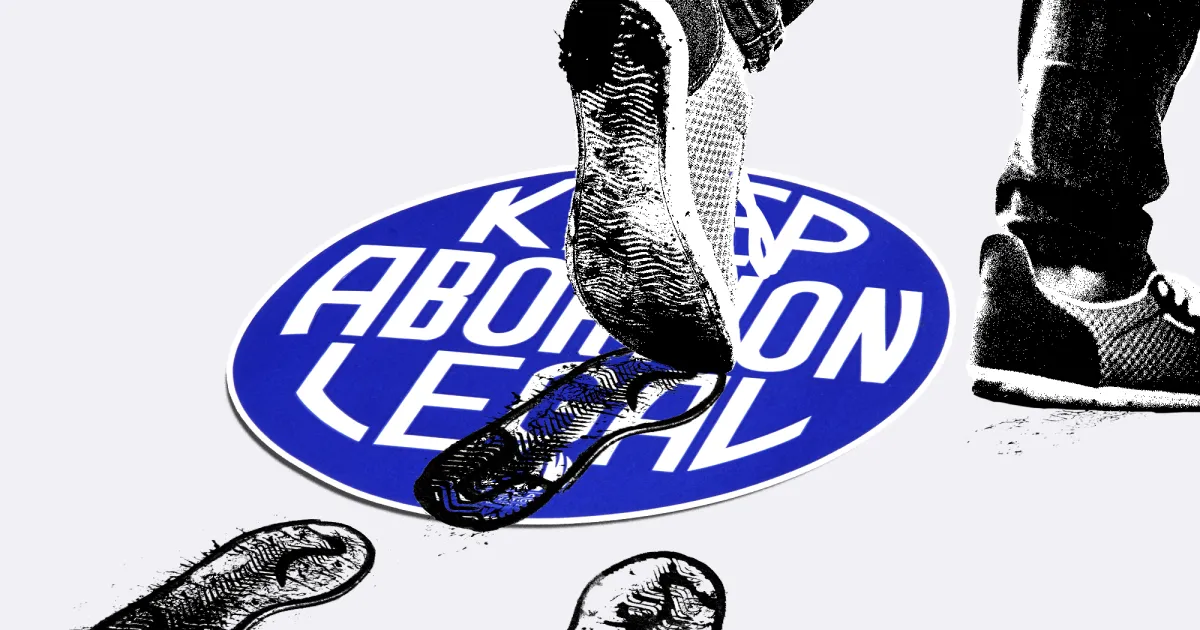
The end of Roe v. Wade in 2022 was supposed to be devastating for abortion access across the US. Thousands of women every month—the ones who could afford it—would be forced to travel long distances to receive care. Many more women would be forced to continue pregnancies they didn’t want and couldn’t afford. The crisis would be worst in the South, the thinking went, because right-wing lawmakers were competing to see who could pass the most draconian bans. 

Read more A Leading Anti-Abortion Zealot Just Quit the FBI

Then something astonishing happened: In the four years after Roe’s demise, the number of abortions rose by almost 20 percent.

It’s one of the paradoxes of the Dobbs era: While abortion rights have been drastically curtailed in much of the country, abortion access has exploded. Galvanized by the extremism of the Supreme Court’s decision, reproductive health advocates have built an entire healthcare, legal, and financing infrastructure that has made abortions possible for hundreds of thousands of women in some of the most conservative parts of the US.

In this package, we look at the surprising resilience of the abortion access movement—and at howabortion opponents, including Students for Life’s Kristan Hawkins, are doubling down on their hardline agenda. At the center of the post-Dobbs story is the growing availability of abortion pills, which now account for almost two-thirds of all abortions in the US. “Medication abortion is here to stay,” one leading telehealth provider says. “You can’t put this genie back in a bottle.”
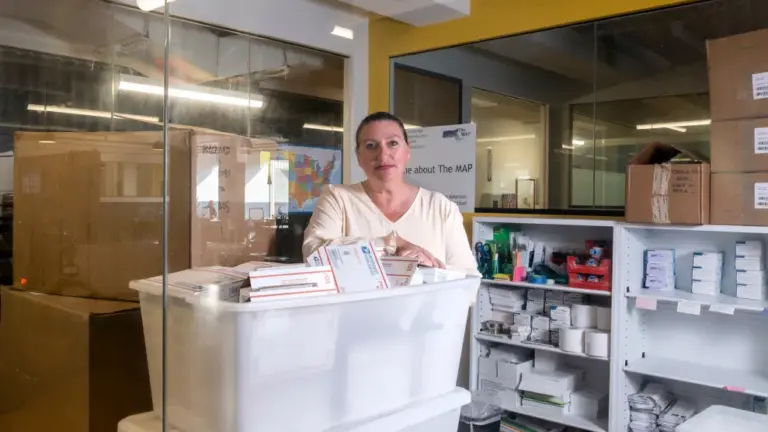
A photograph of a middle-aged Caucasian woman with slicked-back hair sitting in a room with white USPS boxes looking into the camera from behind glass. She leans on a white plastic container nearly overflowing with white carboard USPS boxes.

She’s Remaking the Abortion Landscape One Pill at a Time

Far from buckling under Dobbs, the access movement has created “a whole new way of doing healthcare.”
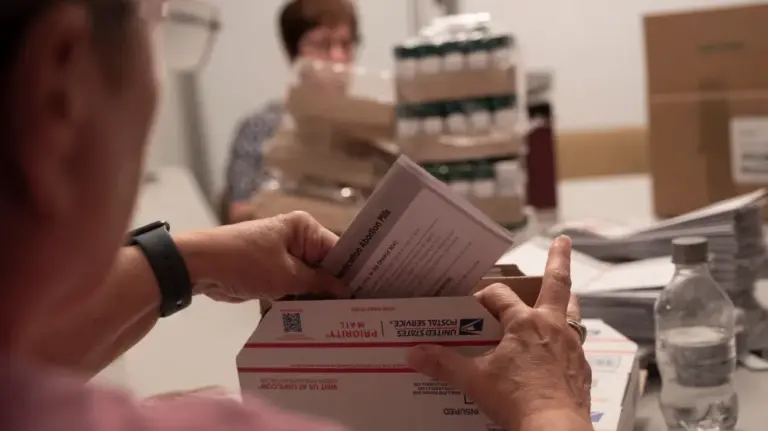
A person seen from behind slips a folded sheet of paper that reads in part “Medication Abortion Pills” into a United States Postal Service box. Out of focus and partially obscured, a woman with short hair sits on the other side of a table loaded with stacks of paper and shrink-wrapped cases of pills.

The Post-Roe Surprise: More Abortions

Abortion rates were expected to tank after Roe v. Wade was overturned. Instead, medication abortion became easy to get—and it changed everything.
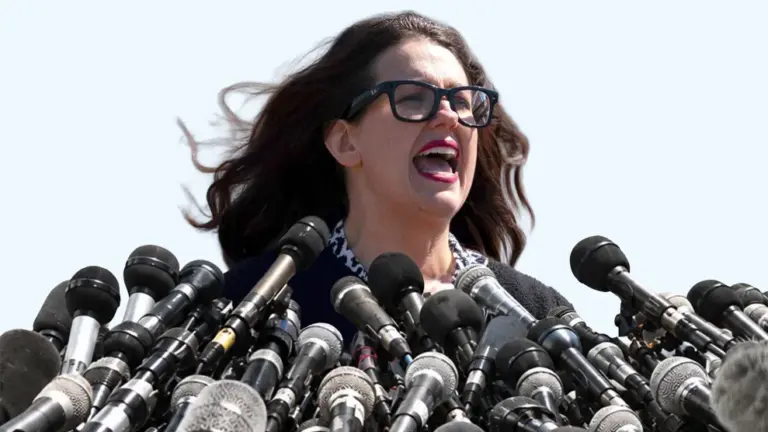
Kristan Hawkins speaks in front of an array of microphones.

Kristan Hawkins Helped Kill Roe. Now She’s Fighting to Control the Movement She Created.

How the Charlie Kirk of abortion moved from the fringes to the mainstream.
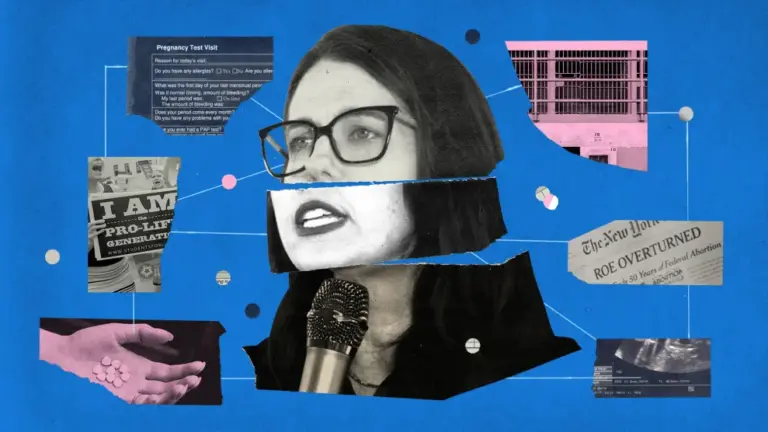
Photo collage of Kristan Hawkins, mid-speech; she is surrounded by newspaper and photo clippings of abortion medication, a sonogram, pregnancy test results, a jail cell, a pro-life protest, and a headline about Roe vs. Wade. The clippings are all connected by white string to Hawkins.

Meet Kristan Hawkins, the “Charlie Kirk of Abortion”

“I want your audience to be like, ‘Wow, I really don’t like her, but she had some good points.'”

Conceptual illustration portraying a pile of medication surrounded by a group of hands that protect the pill bottles and boxes from an ominous lightning storm around it.

Inside the Clandestine Network of Abortion Pill Mules

“There may come a time where we are one of the only, if not the only, option for the nation.”

I’m hopeful because of readers like you. Will you pitch in today?

We see the headlines on a weekly basis: the claw backs in public media, the gutting of The Washington Post, the bending over backwards to appeal to Trump and his allies.

But not here.

When Mother Jones started publishing 50 years ago, our founders made a critical decision: to be a reader-supported nonprofit. They knew that no corporate owner would be interested in a muckraking newsroom; they also knew that no muckraking newsroom would be interested in following the agenda of a corporate owner.

And so, we’ve been reader-funded for half a century. We rely on contributions from our readers—readers like you—whether it’s $50, or $15 a month, or whatever fits your budget. People give what they can, and every donation makes a difference for our newsroom, which has grown tremendously—in size and reach and renown—since its inception in 1976.

You may be wondering: What does it take to publish an investigation? And what does my donation actually fund? The answers are one and the same: It takes people, resources, and time. And that’s what your donation funds directly.

Read more Trump’s Mass Detention Machine in Pennsylvania

Every donation Mother Jones receives from readers fortifies our newsroom, whether we’re covering underreported scandals out of Washington, DC, or the most important news of the day. Your support keeps us going. If you’re able, donate today.

Thanks for reading.

—Monika Bauerlein, CEO

Available payment methods include Visa, Master Card, Discover, and Paypal.

I’m hopeful because of readers like you. Will you pitch in today?

We see the headlines on a weekly basis: the claw backs in public media, the gutting of The Washington Post, the bending over backwards to appeal to Trump and his allies.

But not here.

When Mother Jones started publishing 50 years ago, our founders made a critical decision: to be a reader-supported nonprofit. They knew that no corporate owner would be interested in a muckraking newsroom; they also knew that no muckraking newsroom would be interested in following the agenda of a corporate owner.

And so, we’ve been reader-funded for half a century. We rely on contributions from our readers—readers like you—whether it’s $50, or $15 a month, or whatever fits your budget. People give what they can, and every donation makes a difference for our newsroom, which has grown tremendously—in size and reach and renown—since its inception in 1976.

You may be wondering: What does it take to publish an investigation? And what does my donation actually fund? The answers are one and the same: It takes people, resources, and time. And that’s what your donation funds directly.

Every donation Mother Jones receives from readers fortifies our newsroom, whether we’re covering underreported scandals out of Washington, DC, or the most important news of the day. Your support keeps us going. If you’re able, donate today.

Read more OpenAI Cancels Its Advanced Model Launch, Then Heads to Lunch With Trump

Thanks for reading.

—Monika Bauerlein, CEO

Available payment methods include Visa, Master Card, Discover, and Paypal.

By admin

Leave a Reply

Your email address will not be published. Required fields are marked *