 By admin
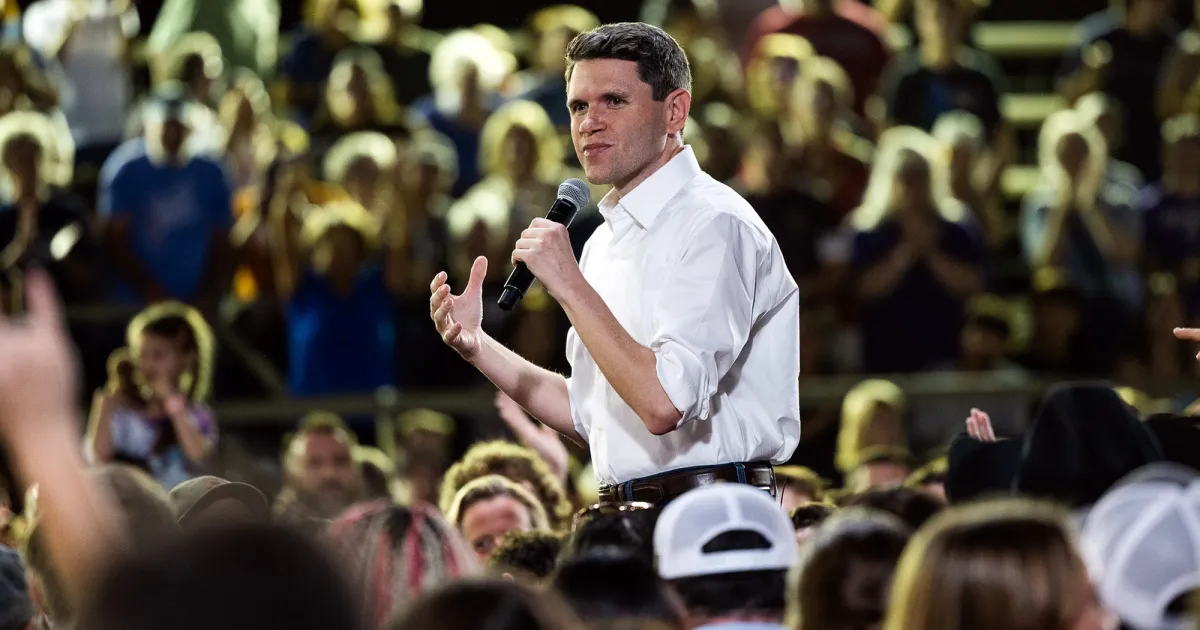
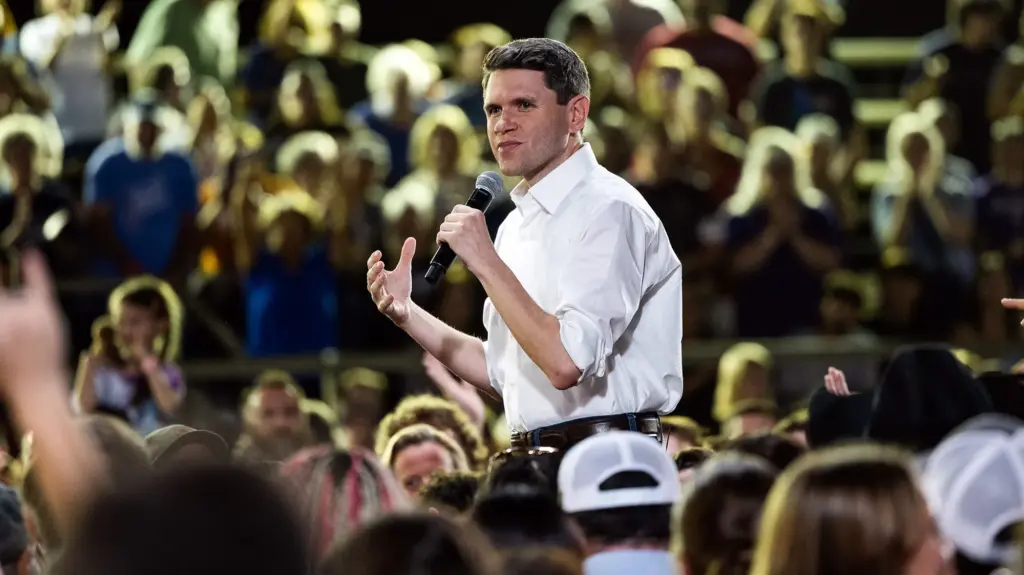
It seemed like a curious time and place for a campaign event until I got inside the gates. James Talarico’s first big rally in several weeks, following a well-documented and spectacularly mischaracterized bout with the flu, took place at a youth football field in San Marcos last Thursday at the exact time 16,229 students and fans were settling down to watch the Texas State Bobcats on the other side of town. But the cameras towering above the illuminated stage, and the polite but quite insistent request to put away phones and signs, gave away the game. Talarico’s team had engineered a postcard-perfect Texas scene to film his closing message to Texas. The crowd was enthusiastic but not unwieldy, the program unencumbered by dignitaries, the Thursday night lights Friday-night bright.
Read more A Solution to America’s Aluminum Crunch Is Hiding in Our Landfills
All events should be so simple. A staffer warmed up the crowd by asking for restaurant recommendations, a student dance group performed a short routine to the tune of “Knuck If You Buck,” and then Talarico, the 37-year-old state representative vying to become the first Democrat to win a statewide election since 1994, took the stage beneath the glow of the beams and an eyelash of a moon.
All week in Texas I kept thinking about what was different. In 2018, when Beto O’Rourke came within two-and-a-half points of beating Sen. Ted Cruz, his campaign was a blur. He hit every single one of the state’s 254 counties and live-streamed everything he did, from early-morning jogs to haircuts to long drives. The DIY style and off-the-cuff messaging made the whole thing work—a former punk-rocker on an endless tour. That approach embodied the general ethos for Democrats in Texas that year. The map was suddenly wide open, and a whole bunch of people were running and winning and trying new things in places Democrats hadn’t won anything in a while. In Williamson County north of Austin, 28-year-old James Talarico walked the length of his district in one day and almost died. He won a seat in the state house that fall by 2,458 votes.
The intervening years proved more frustrating. The map that looked so enticing after the 2018 election was literally redrawn (twice at the congressional level) and the coalition Beto and others wrangled proved more ephemeral than it first seemed. Talarico is running a different kind of campaign now too. If he has visited all 254 counties, he has kept it under wraps. He is not going to skateboard in a Whataburger parking lot or air-drum to “Baba O’Riley.” He is also not going to drop f-bombs or speak extemporaneously about taking away anyone’s guns, although it is his considerable gift to make lines he has delivered perhaps hundreds of times still sometimes sound extemporaneous. Even Talarico’s occasional attempts to moderate past comments come packaged for maximum effect. He is deliberate. He leverages high-value situations to score premium points. He is the person in “Supermarket Sweep” who goes straight for the hair products.
Talarico for Texas, in other words, is a messaging machine. His ability to efficiently frame an argument and deliver it to an audience is why he is leading the scandal-plagued Republican attorney general Ken Paxton in the polls (the plague of scandals has also helped), and why he raised a record $64 million last quarter. But the content the machine refines and spits out—the thoughtful pauses, the perfect answers, the well-timed punches—has to originate somewhere. It is grown on manicured fields under stadium lights. And sometimes, if you stick around when the crowd begins to thin, you catch a glimpse of what it looks like before the filters are applied and the product is refined, when it’s just a man and a crowd, racing against a stopwatch. It’s kind of fun.
Google’s political advertising database offers a revealing look at how Talarico’s campaign is pitching different parts of his message to different audiences. The Democrat is talking about capping insulin costs in ads aimed at Black voters, promising to work with both parties in more conservative-coded spots, and driving a pickup truck while a Spanish-speaking narrator describes the circumstances of Paxton 2023 impeachment. On the stage, though, these different notes come together in harmony; the message at the heart of the campaign is that corruption is a universal story that is crushing the Texas Dream. You may have read, Talarico said in San Marcos, that Paxton has increased his net worth in office by $27 million and now owns 15 homes: “It’s hard to get 15 homes in a game of Monopoly—I don’t know how Ken Paxon got 15 homes.” But Paxton was merely a product of a larger system, he explained, in which a handful of billionaires have rigged the political system so that the people in it work for them: “This is the rot at the core of this broken system; it’s why so many Texans can’t get ahead, no matter how hard they work; it’s why we can’t afford the basics in this economy: We have an affordability crisis because we have a corruption crisis.”
Talarico spoke for 16 minutes, but the point of all that equipment was to turn exactly 77 words in the middle part of the speech into an immaculately choreographed soundbite that could air on TV in the final days of the race. In other words, it was not over—Talarico had to come back out until he and the film crew got that passage exactly right. This was not immediately clear to many in the crowd. And so after he finished his remarks and those supporters began to trickle out through the chain link fence, it fell to the young people in official badges to lure as many of them back as they could. The event wasn’t over, they explained. There was room in the bleachers. James was coming back.
“So this is gonna be fun,” Talarico said, when he bounded back up onto the stage a short while later. He spoke at a light and rapid clip, a sixth-grade teacher forever trying to hold onto the room. “We’re gonna film this ad. It’s gonna be shown all across the state. You’re gonna be in it. This is gonna be your big break. Some of you may become famous movie stars after this, and you all owe me. You owe me a check, okay? Because I gave you your start.”
Talarico explained how the shot was going to work, that the man across from the stage was a director and his name was Roy and that everyone needed to stick together here. “So this camera is right above my head. So it’s going to be cool—it’s going to, like, start there, and then as I say what I’m supposed to say, it’s going to, like, move about, and it’s gonna look awesome. So, don’t look at the camera though, look at me. We’re all going to act normal, and they’re going to tell me when to start.”
“Yeah, that’s right,” said Roy.
“And I’m going to be looking this way,” Talarico said, gesturing in front of him, away from the bleachers. “Sorry to everyone behind me. I know, I know. But. But! Y’all are gonna be in the ad.”
Read more Memphis Wants to Be the “Digital Delta.” Its Residents Want to Breathe.
The bleachers cheered.
“We may do this a couple times. So you’re all gonna have to—you’re all gonna have to act like what I’m saying is very interesting. Okay?”
The crowd cheered again.
“But. But. But, but, but! No applause, right?”
The crowd made a noise.
“Well, see? You already messed up.”
“Yeah, hold the applause,” Roy said.
“Yeah,” Talarico added, “no applause because it’s—and the reason why is because it’s like a 30-second ad. So if you applaud, that’s—that’s money. Time is money, okay?”
The first shot landed at 30 seconds flat, which left no room for the approve-this-message disclaimer, so Roy ordered up another. This time, someone clapped at the end.
“One guy. One guy!” said Talarico, but it gave him an idea. “Actually, should they applaud at the end?” he asked the director.
“Yeah, I think that’s okay.”
“Okay, so now I’m gonna do it, and you’re gonna be quiet, and then when we finish—when I say ‘…life more affordable’ at the end—then you’re gonna applaud. Is that right?”
“That’s right,” Roy said.
The second take was slow again. Point of order.
“Do you want me to look down here, or should I look up there?” Talarico asked.
“See, I think you’re addressing the crowd,” Roy said. “The crowd’s everywhere.”
“Oh, okay—I’m addressing the imaginary crowd,” he said, and laughed a little.
They went again. And again—still slow.
“Man! Okay. Here we go. I’m gonna go so fast,” Talarico said.
Again.
“Roy!” someone shouted. “We love you, Roy.”
They were good on time, but the crew hadn’t nailed it. Talarico turned to the crowd in solidarity: “It’s not us! It’s not us!”
It was starting to feel like that Saturday Night Live sketch, where Tom Brokaw has to film a succession of news reports about the death of Gerald Ford. The nominee—a veteran of the stage who once played Aslan in a high school production of The Lion, the Witch and the Wardrobe—joked that he was “25-take Talarico.” Maybe we’d be here all night. Maybe they would turn on Roy. The moving camera got into place again and Roy counted down. Talarico slipped into character, turned to the imaginary crowd, and tried to reduce the most expensive Senate race in American history to 27 seconds.
“We can’t afford gas or groceries or health care because the system has been rigged by billionaires and corrupt politicians like Ken Paxton,” he said. “In the state house, I worked with both parties to cut your taxes and cap insulin costs. This election is about whether or not you want a senator who puts money in your pocket or money in their own. Together, we can defeat the most corrupt politician in Texas and make life more affordable.”
He blinked a few times, and then smiled.
“Roy!” someone shouted.
“Come on Roy!”
That was a wrap. When I checked back a few days later, an image from the rally was Talarico’s new profile pic and there were 48,000 likes on a photo of him standing on the field, looking toward the end zone. He had shouted out his “Tala-freakos” on-stage, apparently—that was being clipped and shared too. The ad wasn’t up yet, but you could start to see what the game’s final drive might look like. Friday Night Lights stars Jesse Plemons, Adrianne Palicki, and Connie Britton had teamed up to film a hype video for the campaign before the start of early voting. Talarico’s “Clear Eyes, Full Hearts” bus tour was about to get underway outside Dallas. Democrats have been here before. But “this year,” promised the heroes of Dillon, Texas, “things are gonna be different.”
Read more The White House Is Using Slurs to Attack Journalists