 By admin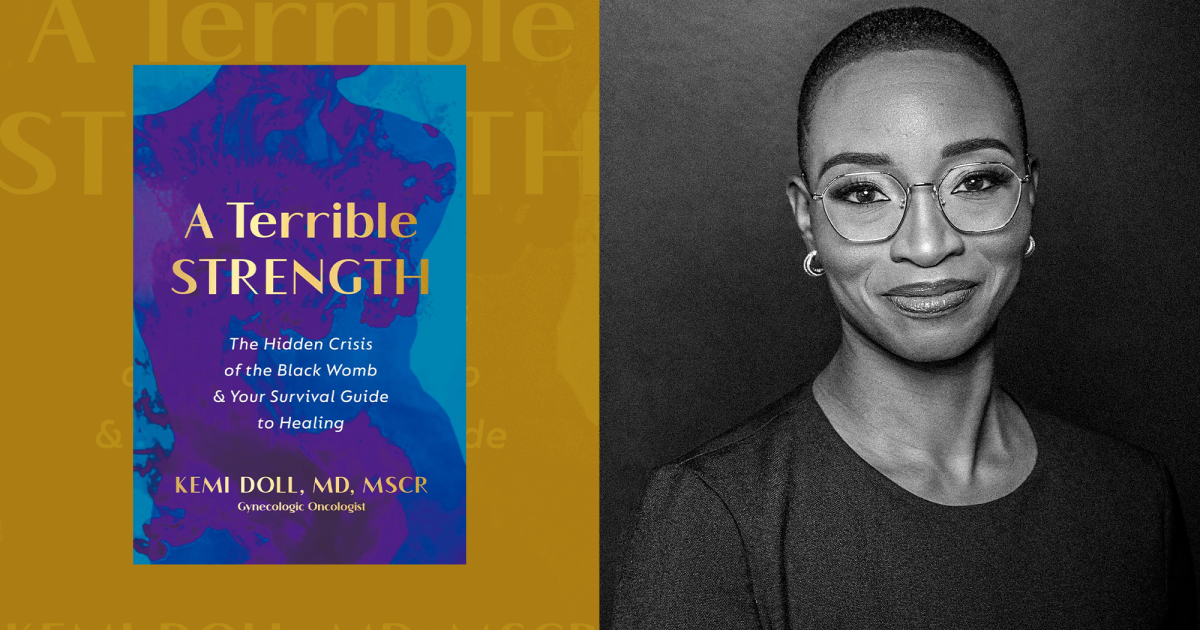
I grew up in a household of women who didn’t talk much about their reproductive health. Period talks were reserved for hushed tones, always behind closed doors. But over the years, stories began to emerge: A relative clocking into work despite her stomach being so swollen with fibroids she appeared pregnant; a childhood friend excelling in school while doctors dismissed her chronic pain and missing periods as “anxiety”; a family member’s miscarriage garnering little sympathy from nurses.
Read more Secret Recording Exposes Claims of Toxic Leadership After a Marine’s Suicide
Black women have long been forced to grin and bear reproductive pain until it becomes unbearable—just like the data has been telling us: By age 50, 90 percent of Black people with uteruses in the United States report having fibroids and often have severe symptoms like anemia and intense pain. Black women are not only more likely to have uterine cancer, but twice as likely to die from it than non-Black women. Black women are also three to four times more likely to die in childbirth. It’s a crisis that transcends economic and education boundaries, with celebrities like Beyoncé and Serena Williams experiencing near-fatal pregnancy complications.
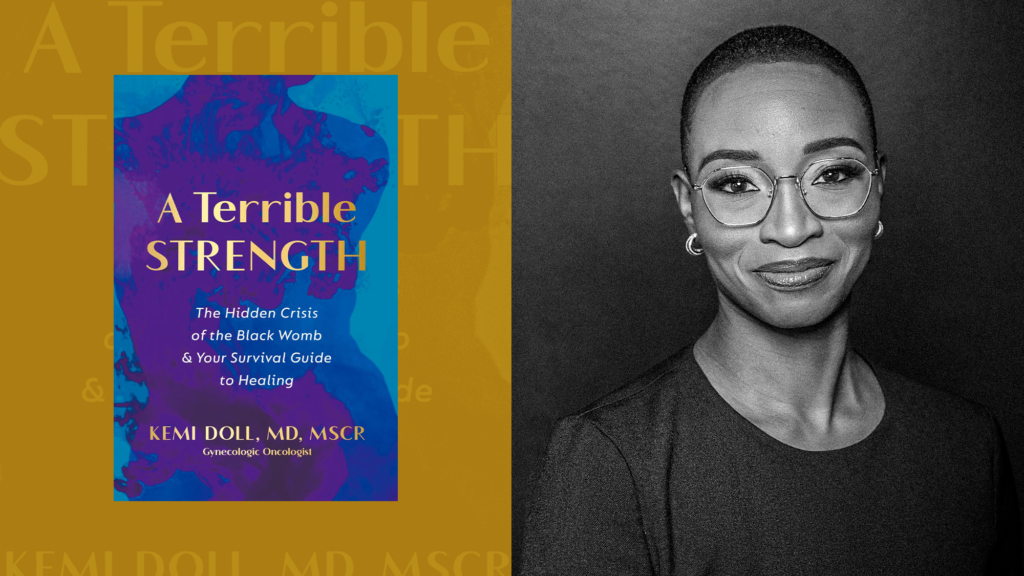
I spoke with Dr. Kemi Doll, author of the new book A Terrible Strength: The Hidden Crisis of the Black Womb and Your Survival Guide to Healing, about what Black women can do to educate ourselves about our reproductive health and how we can advocate for ourselves in our gyno offices and beyond.
This interview has been edited for length and clarity.
One of the main points you bring up is how breast cancer, ovarian cancer, and our ongoing maternal mortality crisis are reproductive issues that make headlines. But with uterine cancer, the disparity in Black women doesn’t receive that same attention from the public. Why is that?
I have a lot of ideas about this. Part of it is that all of us, the public included, are so used to not talking about “down there.” So we don’t. We eliminate that world in a woman’s life unless she’s pregnant, unless we can tie it to something like bringing life into this world. But then we see this [lack of care] played out on a larger scale, where you have this cancer disparity.
Uterine cancer is the worst cancer disparity that we have that affects women. We’re getting more cases every year. But the level of dialogue and awareness doesn’t match the gravity of the crisis. It’s an example of what I’m talking about: the power of silencing. It’s why I’m so passionate about talking about the womb in the realm beyond giving birth and beyond being pregnant, because we all spend most of our time not pregnant, and we all deal with these conditions every day. It’s beyond time to stop that silencing and suppression.
I think that it connects right back to how, when a girl has her first period, you teach her how to hide it. That a successful period is one that nobody knows is happening. That goes all the way up to a uterine cancer epidemic and a disparity among Black women that nobody knows is happening. Those things are connected.
Let’s talk about the misogynoir that Black women face: the expectation to be stoic, to be high achievers, and excellent. Can you talk about this and how that stereotype affects Black women and their reproductive health?
One hundred percent. I think we have to understand where we came from with this history. At the beginning of obstetrics and gynecology, physicians were giving insurance policies on enslaved Black women to say: This woman can reproduce. It was a field that was essentially looking at Black women’s bodies only through the lens of how well this body can reproduce.
After Emancipation, when Black bodies are no longer directly profitable, there is no interest in the continued health and well-being of that body. When this is the history of gynecology, these reproductive disparities make sense.
In this system, Black women’s wombs and our reproductive health are not a priority. What that means is that we have decades of research that haven’t focused on the conditions that most strongly affect Black women. It means that when we develop treatments, solutions, clinical protocols, and guidelines, we do not consider how they would impact or how they would work or not on Black women. That misogynoir is so deep, and it’s on so many levels that I understand the strength that Black women have to have. Your pain is not read. Your vulnerability is not legible. We literally can’t see it. So it means that Black women suffer in silence, and we call it endurance. I don’t think you tell the story of gynecology itself if you don’t tell the story of the suffering of the Black womb and this crisis.
One of my favorite aspects of the book was how you weaved in the more clinical and informative parts with the very human stories of Black women’s reproductive health. Can you talk about how you decided to add these women’s stories and what it was like interviewing them?
The Black tradition is a storytelling tradition. Ain’t nobody tell a story like Black people can tell a story. So, I’m harnessing all the tools in my toolbox to be able to communicate long-overdue information. I’ve recognized that there’s a huge gap to bridge between what my field of gynecology has done to Black women and the information that I need to impart.
Read more The World Cup’s First Score: Union 1, Owners 0
I am a qualitative researcher, so I do interviews as part of my research work on the scientific side. I knew each of these women that I profiled. But what was really profound is that every time I left an interview session, I left with a completely different level of understanding because I asked them so specifically about their womb.
We have access to another layer of understanding each other, and Black women need each other in these times. We need bonds that are unshakable in these times. I felt like I learned about all of these women even more, and the respect and love for them that I had grown.
Let’s talk about that historical expectation of excellence and stoicism, and how it plays a role in the disproportionate rates of uterine cancer in Black women.
One of the reasons why all the women [profiled in the book] are so incredible and high-achieving is that it’s really important to change the face of what suffering looks like. I can tell you from the medicine side, we have a certain image in our head of what a woman in pain looks like. What does a woman suffering look like? And Black women don’t get to look like that. We can’t walk around with that kind of vulnerability.
When you can imagine the other things that are on a Black woman’s plate, and then when you imagine what the threshold is that we have to hit before we are really saying, “Whoa, whoa, whoa, I need help,” we are unfortunately just managing and dealing with that symptom for months and years before being seen. What that means is that Black women are showing up with stage three and four cancers, when it’s not curable.
What are some early signs of uterine cancer that people should watch out for?
The cardinal sign is postmenopausal bleeding. The formal definition is that if it’s been 12 months since your last cycle and you are of menopausal age, and then you start bleeding again, that is the number one most common sign of uterine cancer. It’s usually not a full period; it’s a few little spots. It doesn’t mean you have cancer, just like a lump in your breast does not mean you have breast cancer, but it does mean you need to go get it checked out. Another thing that we see is that, especially in Black women who are more likely to have irregular cycles, [potential signs of uterine cancer] are heavier cycles as they get older, instead of lighter.
Number three is fatigue. This is where I start talking in the book about whether Black women even know when we have fatigue. Do we even know when we’re tired? Because, again, the way that we can endure. Another sign is pelvic pressure. Bleeding after sex, in your fifties and sixties, is another sign. We also don’t talk about that. We act like older women don’t get it in. Meanwhile, I am like, “Girl, I don’t care what you’re doing, but if you’re bleeding after sex, I need to see you.”
Even before Trump’s second term, little funding went into women’s reproductive health, with less than 8 percent of funding for the National Institutes of Health going toward women’s health research in 2023. This, paired with the cuts to reproductive health research on top of the DEI initiatives by our current administration, seems ominous.
It does concern me because we’re not just missing out on these years of research right now. We’re missing out on a compound of research discoveries. A study that was canceled today would have had some output in two years, four years, and five years, and then that would have led to more discoveries. All of those things down the line are now delayed by potentially decades. It’s really sad. On the other hand, there are those of us in this field who are not going anywhere. I’m still running my research lab. We’re still figuring out funding. We’re still getting creative. Our devotion is to Black women and the Black womb, and we are going to continue to use science to improve things, period.
Can you talk about the historical background and current medical racism that has led to this generational distrust of the medical system among Black women specifically?
How much time do you have? I tell a lot more stories to educate people about just how much mistreatment there had been in gynecology specific to Black women’s bodies, and this idea that Black women were more appropriate to experiment on than white women, and all these things, so I do think it’s important to educate. But I don’t think as a Black woman you need to know that history to know that when you walk into a doctor’s office, especially when it’s about the womb, that you are on guard. You are on guard for being dismissed, being neglected, because it is such a vulnerable position to be in when you are seeking care in that way, right? These are the intimate parts of ourselves that we often don’t talk to other people about. We have to tell stories that might be difficult, in all of these ways.
It’s so vulnerable, and yet you’re entering into a system that would happily just dismiss you, that you have probably been dismissed by, or you know somebody who has. Medical racism is very much alive. It’s with a great deal of responsibility and gravity that I say, Black women, you need to go to the gynecologist. I will tell you that as a gynecologic oncologist, as a cancer physician, I want you to live.
Read more In the United States, Solar Energy is Outpacing Coal for the First Time Ever