 By admin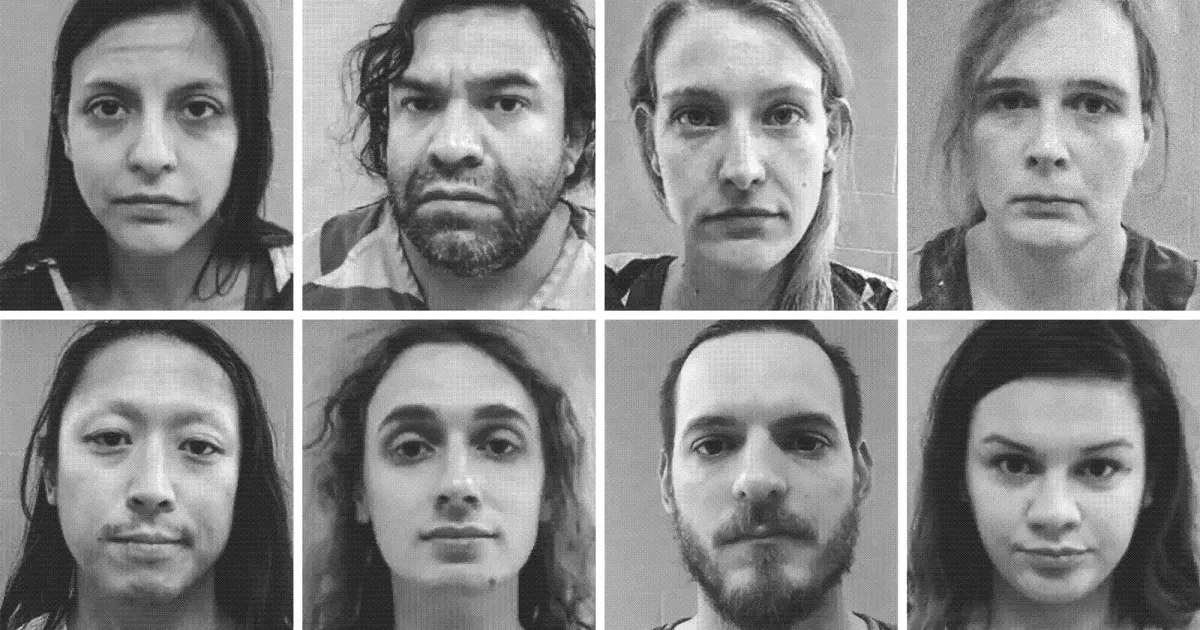
- Share on Facebook
- Share on Twitter
- Share on Bluesky
- Comments
Savanna Batten got her first call from the FBI the year she turned 18. It was 2011, and the Animal Liberation Front had set fire to a fur store in Idaho and raided mink farms in Iowa and Washington. The feds were cracking down, just as Batten had been chosen as president of Animal Connection of Texas. Her mother, Cynthia Lokey, says the group she and her daughter belonged to confined its own activities to peaceful protest. “We never did anything like that,” she said of the ALF actions, “but I’m not gonna knock other people for doing it, because those places are atrocious.”
Read more The Kushner-Backed FIFA Takeover Tearing the Soccer World Apart
Even then, Batten knew not to speak to the feds. Animal Connection’s lawyer told her, “If they come to your door, don’t talk to them.”
Fourteen years later, the FBI once again had Batten in its sights. On July 4, 2025, she’d participated in a demonstration outside Immigration and Customs Enforcement’s Prairieland Detention Facility, southwest of Dallas. The plan had been to make noise and shoot off fireworks to let the detainees know they weren’t alone. But some of the activists were armed, and one of them shot a cop.
Law enforcement arrested Batten and nearly everyone else who attended the protest, 11 of them with . “It was a planned ambush with the intent to kill ICE corrections officers,” the US attorney said three days after the shooting. “This was not a so-called peaceful protest.” The defendants, prosecutors initially theorized, had used the chaotic demonstration to lure officers into a deadly trap.
Then, in September, a gunman in Utah assassinated Charlie Kirk. The evidence suggests that the accused murderer acted alone. But in the furious reaction that followed, the Trump administration ramped up its assault on dissent, alleging that a network of left-wing activists and NGOs were engaged in a nationwide plot to foment political violence. Trump designated antifa—a decentralized anti-fascist movement he described as “a militarist, anarchist enterprise”—as a domestic terrorist organization. He ordered law enforcement to use every tool available to “investigate, disrupt, and dismantle” antifa operations.
The Prairieland case became the Justice Department’s proving ground for its new war on antifa, and the defendants were on federal terrorism and conspiracy charges punishable by decades in prison. Prosecutors spun up an elaborate tale of a Texas “Antifa Cell” engaged in a campaign of terror—one in which the fireworks demonstration became “conspiracy to use” explosives, and possession of radical literature became evidence of criminal intent. The government even portrayed Batten’s leftist book club as a recruiting and propaganda arm of the conspiracy. Batten, the indictment , was “part of a group that created and distributed insurrectionary materials called ‘zines.’”
Conspiracy charges can be an , enabling prosecutors to win convictions against defendants who were only marginally involved in alleged crimes. And as anti-ICE protests ramped up, the Trump administration began seeing conspiracies everywhere. Five days after the Prairieland shooting, the DOJ for conspiring to impede ICE officers in Washington state. In October 2025, the feds brought conspiracy charges against six people (including Mother Jones contributor Kat Abughazaleh) protesting at a Chicagoland detention center—a case that would eventually fall apart amid court filings “wide-ranging” prosecutorial misconduct. Undeterred, the DOJ then filed conspiracy charges against 15 people in Minnesota it claimed were affiliated with “Antifa affinity groups”; the government hasn’t bothered to allege that any of those defendants injured federal officers.
But Prairieland was where the administration hoped to make its biggest mark. As the trial began this past winter, FBI Director Kash Patel spoke as if it were already a done deal. “Nineteen people have been convicted for acts of violence related to antifa,” he said on a podcast. “You don’t got to believe me…Everybody can go read the public indictment.”
Patel’s pronouncement may have been premature, but he wasn’t wrong. It didn’t matter that little evidence of a premeditated attack on law enforcement ever emerged. It didn’t matter that every defendant, except the actual shooter, was exonerated of the original attempted murder charges. It didn’t even matter that prosecutors struggled to show the defendants belonged to an “antifa cell.” In the end, they convinced the jury that Batten and most of her co-defendants were guilty of rioting, conspiracy, using explosives, and supporting terrorists.
In a Fort Worth courtroom in June, a right-wing judge sentenced Batten to 50 years behind bars—a stark warning to others who might challenge the president’s agenda.
Batten was a prodigy among North Texas activists. When she was 12, around the time her father abandoned the family, she started reading about factory farming. She soon went vegan and convinced her mother to give up meat. They began attending protests, taking on the Ringling Bros. Circus and Fort Worth’s historic Stock Show & Rodeo. “She was so involved in everyone’s rights,” said Susan Oakey, a longtime Animal Connection activist. “Not just animals, but anyone who was mistreated.”
There was nothing cynical about Batten’s activism. “She’s never even voted,” said her older sister Amber Lowrey. “It’s not politics for her; it’s just where she sees injustice happening, that’s where she wants to be.”
Batten didn’t go to college. “She likes to educate herself,” her mother said, and besides, “we were poor people.” Instead, she joined the Emma Goldman Book Club, a local anarchist reading group run by Elizabeth and Ines Soto. The Sotos were “working-class parents who had kids fairly young and have managed to live very rich political and social lives,” said Luis, a participant in the book club, “trying to find ways to be meaningfully contributing to history.”
The Sotos and Batten drew close. She helped lead the book club and friends began to think of them as a unit, at times referring to them as “the trio.” It was an exhilarating meeting of the minds. Batten still went to protests, garnering a couple of arrests that were resolved with community service, but the book club became a center of her political life. There were potlucks, skill-sharing workshops, and poetry readings. The ideas they discussed were radical, frequently circling insurrectionary anarchism. “Anarchists must attack,” reads one anonymous zine, Insurrectionary Anarchy: Organizing for Attack, passed around by participants. “Waiting for the state to disappear is defeat.”
Their tight communities kept them from getting carried away. “Obviously, we have these very revolutionary ideas, but we also have to acknowledge that nobody wants to leave their kids,” said Kels Fryman, a book club participant. “We do have a responsibility of care.”
In 2024, Batten and the Sotos received 2,000 pounds of community-building tools in the mail. An anarchist publishing venture in the San Francisco Bay Area was shutting down, and their copy machine, hydraulic paper cutter, and Duplo DB-280 binder needed a new home. It was a gift and a responsibility. They installed the print shop in the Sotos’ garage and started throwing around logo ideas. “They had their first big book order for their poetry stuff,” Fryman said. “They were like, ‘Someone is actually interested in having us publish their poetry. We’re gonna get a real order, not just us being dorks.’”
Their work was rudely interrupted by the feds.
July 3, 2025—the day before the day that would change her life—was Batten’s day off at Panera. Alone in her Forth Worth apartment with the feral cat she’d rescued from behind the restaurant and the hermit crabs she’d adopted out of a dumpster, she battled a cold.
Meanwhile, in a ranch-style house on the far side of the metroplex, plans for the next day’s action were taking shape. The South Dallas residence had a shabby abundance about it, with three mattresses in some bedrooms, Costco-scale stores of snacks, and video gaming setups under string lights. There were 10 adults, an infant, and two dogs living there. Many of the residents were trans and had helped each other find work at UPS. Since the group had come together to buy the home in 2021, they’d called it the “Big Gay House.”
It was a hub of leftist activism; many there knew Batten and the Sotos through the book club, though the trio wasn’t known to hang out at the house. The home was also a refuge. “We helped a lot of trans people that were struggling with their home situation,” said Stephanie Shiver, who lived there with her wife, Meagan Morris. One of them was Autumn Hill, who’d grown up in a conservative Christian home in Pennsylvania. Coming out as trans to her parents didn’t go over well, and she moved to Texas in 2022. Her now-wife, Lydia Koza, joined her soon after. “Meagan would talk about this place as though it was an organization unto itself or a cause unto itself,” Koza told me. “It’s actually much more informal than that. It’s just a bunch of nerds with a house.”
The idea for a protest at the Prairieland facility had been brewing for a few days, but the details were still fuzzy. A little after 9:30 p.m., a group of activists stepped into the backyard and started throwing out suggestions. The most radical came from Benjamin Song. “We can take the place and free the people inside,” Susan Kent recalled Song saying when she testified as a cooperating witness. “Shoot over their heads with cover fire.”
Song grew up a Rush Limbaugh fan and served in the Marine Corps Reserve, receiving an other than honorable discharge after not being allowed to skip drills to finish college exams, the Washington Post reported last year. Song broke with the right in 2016. “I used to write off the accusations that the Republican Party was racist because here we are, this Asian family who are Republicans,” Song told the Post. “Then you saw the racist rhetoric escalate in 2016 with Trump.” In 2019, Song spent two weeks protesting in Hong Kong. “They were Asian people under a Western system just faced with this unimaginable authoritarianism and bravely fighting back,” Song told the South China Morning Post.
Song’s suggestion for the Prairieland action—something out of One Battle After Another—elicited a chorus of disagreement. “I remember the mood changing appreciably,” Koza said. “I was one of the people who was very emphatically like, ‘No, that’s insane.’”
Still, nobody was too alarmed. Song didn’t live in the Big Gay House, but was often there, in part because they were gender non-conforming. Friends tended to use they/them or she/her pronouns when referring to Song, whom they called Champagne or Bubble. “If I had thought Bubble was serious enough about this other plan…I would have told everybody, ‘Don’t go. Also, maybe we need to stop having Bubble at the house.’ But I didn’t think it was that serious,” Koza said.
The group settled on a “noise demonstration”—setting off fireworks and shouting support—to let detainees know they hadn’t been forgotten, but someone asked if they were still bringing guns. Guns are a fact of life in Texas, and Song and some other members of the community believed they had an important role to play in leftist politics. Song belonged to the local chapter of the Socialist Rifle Association, a national organization that the FBI was investigating even before Trump returned to office. They’d also joined the Elm Fork John Brown Gun Club, which provided security at protests, drag shows, and homeless encampments. And they led firearm trainings at the Big Gay House, focusing on techniques like suppressive fire, where a stream of bullets is aimed around, but not directly at, a target, limiting its movement.
“We’re just trying to survive in this fucked up self-immolation of the United States,” Koza told me.
In a Signal chat, Batten’s friend Maricela Rueda, a poet and doula, argued that “rifles might make the situation more hot.” Song countered that guns would actually deescalate the situation: “Cops are not trained or equipped for more than one rifle so it tends to make them back off.” In any event, guns weren’t a deal-breaker.
By the day of the protest, Ines Soto was telling a group chat of around 200 leftists that this action would be the ideal event for anyone who was more comfortable at book clubs than demonstrations. “Noise demos are really dope for people inside,” he wrote. “These are pretty low risk.” Still, when the FBI searched his car following the protest, agents would find a satchel with a Glock hanging from a headrest.
Batten arrived late to the Prairieland protest, catching a ride with the Sotos after a full day at Panera. By the time they pulled into Alvarado, the small town near Fort Worth over which the 1,000-bed Prairieland facility looms, the others had already fanned out along the tree line. What happened next was vividly described in court documents and trial testimony.
Rueda was there, shouting “¡Esperanza!” into a megaphone. Others pulled fireworks out of a red Igloo cooler and shot them over the facility; surveillance footage from the evening shows their bright bursts in the sky. The Sotos and Batten encountered other familiar faces from leftist community events, including Autumn Hill, Zachary Evetts, and Seth Sikes.
Song, donning a fluorescent green gaiter, stationed themself nearby as a lookout with their partner Rowan Gibson and a cart carrying a rifle bag. Meagan Morris stayed behind too, playing Pokémon on a Nintendo Switch in a red minivan many in the group had used to carpool from the Big Gay House.
The noise demonstration had its intended effect. Detainees pressed against the windows. “Everybody in the facility was in the back,” including “the aliens,” Officer Dekeithan Reedy, one of the contracted ICE guards, testified. They could see the protesters and the protesters could see them. Law enforcement would allege the fireworks had been aimed at the building, though the warden testified the explosions caused no damage. The only person hurt by a firework was Sikes, who failed to read the instructions. “It went off in my lap,” he testified.
Two protesters split off and ran to the employee parking lot. One of them was Nathan Baumann, a 20-year-old from College Station who had never met anyone in the group before. He’d only joined the Dallas–Fort Worth leftist Signal chat a few weeks earlier, when a cute girl had shown him the QR code at a No Kings protest. Partly hoping to see her again, he’d driven north for the protest at Prairieland. He showed up wearing black bloc attire—a tactic he claims he learned about on TikTok—and carrying spray paint.
In the parking lot, Baumann started kicking out brake lights and tagging a car with “bigot” and “ICE Pig.” Moving to an empty guard shack, he painted “Fuck You Pigs.” He testified that another protester broke a security camera and slashed all four tires of a van used to transport detainees. Initially, Baumann claimed this was Sikes, but in court settled on Evetts. The total cost of the damage to the car and security camera was $3,018.
Two freaked-out guards stepped out of the detention center and approached the protesters at the fence. “We start to tell them they have to leave,” recalled Reedy. At 10:56 p.m., a 911 call went out from Prairieland’s control center. “Somebody’s trying to get in. Can you send somebody?” the caller said. “They’re walking the perimeter.”
As the protesters fled, it began to rain. Sikes and Hill briefly argued about whether to pick up the debris from the fireworks. “I wanted to ditch,” Sikes testified. Then he saw the lights of a cop car approaching. “This has turned into a situation I very much don’t want to be part of,” he said. “I’m running.”
Alvarado police Lieutenant Thomas Gross pulled into the parking lot just before 11 p.m, his body camera rolling. He’d spotted the anti-ICE graffiti and saw a masked protester run past him. Gross yelled, “Stop!” then exited his vehicle, pulled his gun, and gave chase. Within seconds, Song shouted, “Get to the rifles!” and started firing. One round struck Gross in the upper shoulder, coming out near his neck and lodging in his ballistic vest. “Fuck, I’m hit,” he shouted as he went down.
Sikes looked back just in time to see the muzzle flash. He recognized the “thuk-thuk” of the binary trigger on Song’s AR-15, which doubled the rate of fire, from his Socialist Rifle Association range days. Gross lifted himself back up, balancing on a knee, and fired three rounds in response. One hit Song’s AR-15, jamming it.
A moment later, Song came running past Sikes. “Oh shit! Oh fuck! Oh shit! Oh fuck!” Song yelled as they ditched their rifle.
“What the fuck did you just do?” Sikes shouted. But Song was gone.
Batten and the Sotos were down the road when the shooting started. They clumped into a larger group as Rueda and Sikes caught up. Soon, police were everywhere, ordering them to sit down. The cops began picking apart the protesters’ bags. Sikes had a pistol on his hip and a disassembled AR-15 in his backpack. He’d wanted to be prepared for “aggressive counterprotesters,” he later testified.
At 11:12 p.m., law enforcement pulled over Meagan Morris’ minivan less than a mile from Prairieland. Johnson County Sheriff’s Deputy Carl Parsons noticed a pistol on the floorboard and asked if there were any other weapons. “There’s some in the backseat,” Morris said. The cops snapped on gloves and uncovered several bulletproof vests, rifles, and loaded magazines.
“Bro, what the fuck?” Parsons mused. “This is like a straight coordinated terror attack on fucking Prairieland.”
Nearly 24 hours later, Song lay in a field of sunflowers, dehydrated and hallucinating, as drones and helicopters flew overhead. Song, who had changed their Signal username to “Delete,” opened the app and texted Lynette Sharp and Susan Kent to arrange an extraction. “He crawled all night, all day the next day,” Sharp testified. By the end, she said, Song had “started to pray to the sunflowers.”
Sharp and Song’s roommate John Thomas finally found Song about a mile from Prairieland on Highway 67. “He said, ‘Thank you for saving my life,’” Sharp recalled.
There was no plan for how to hide Song, but they quickly settled on an apartment where Thomas was cat-sitting. The next day, Sharp brought the fugitive edibles, a blond wig, and chicken wings. They put their phones in the microwave and stepped into a bedroom to debrief. According to testimony from Sharp and Thomas, both of whom signed plea deals, Song told them they’d shot the cop and that if they could turn themselves in and get everyone else out of trouble, they would, but that wasn’t the way it worked. Song said they were glad nobody was killed.
Song would remain on the run for 11 days, spawning online comparisons to Luigi Mangione. In the meantime, law enforcement started searching for anyone they hadn’t caught. Baumann, Gibson, and Evetts were all arrested the night of the shooting. Hill somehow made it home to the Big Gay House around midnight. “She seemed shell-shocked,” Koza said. The next day, around dinner time, the FBI bashed open the front door.
“They broke windows, they called in a big BearCat, they had a drone fly in,” Shiver said. “The first person out of the house [had] a one-month-old baby literally in her arms,” Koza recalled. Hill was taken away in an armored vehicle and the others were left to stand outside while agents ripped apart their home, emptying a gun safe and seizing literature.
More raids followed. At one point, an FBI agent seized a “Proud Anti-Zionist” sticker from Maricela Rueda’s jeep; at trial, the agent said he’d been looking for anything “anti-government.” Rueda’s husband, Daniel “Des” Sanchez Estrada, wasn’t involved in the Prairieland action. But according to his friend Kels Fryman, he began to worry that his collection of radical literature could compromise his green card status. So, following Rueda’s arrest, he dropped off a box at Fryman’s apartment. Shortly after, he was pulled over on the pretext of making a wide right turn, according to court testimony. The feds ultimately charged him with corruptly concealing evidence, alleging he’d moved the subversive “documents and propaganda” to disrupt their case against his wife. They raided Fryman’s place, too. “Our entire apartment was unlivable,” she said. “They flipped our beds; they took out every drawer in the house and dumped it on the floor. There’s still broken glass in our couch.”
“I heard a buzzing,” remembers Dario Sanchez, a Socialist Rifle Association member whose home was searched on July 15, 2025, as part of the investigation and who is now facing state charges. “It was a small quadcopter. It was just floating around in the living room looking at us as we walked out.”
That same day, Song was finally arrested at the apartment of another friend, Rebecca Morgan. The cops had caught the shooter, but the raids and arrests of people peripherally involved with their communities continued into the next year. The Sotos’ house was searched twice because the FBI was “looking for evidence of mass production of propaganda,” an agent testified. Among the items seized, according to court documents: “Anti-Government Papers,” “Binder of Revolution based Literature,” and “Box of Pamphlet and Flyers.” The feds even took the printing equipment.
“They kept their machines,” Elizabeth Soto’s attorney Blake Burns later told jurors, “because they hate what gets printed at the Sotos’ household.”
Batten first called her mother from the Johnson County Jail around 4 p.m. the day after the protest. “She said, ‘I didn’t do anything,’” Lokey recalled. They focused on practical matters, like the pets. “She was very concerned about her crabs and her cat,” Lokey said.
Batten didn’t yet know how bad things would get. “She expected that once they had a chance to parse through everything, it was going to be found that this was all a big misunderstanding,” said Lowrey, her sister.
The arrestees were immediately thrown into solitary. Batten struggled with the prolonged seclusion—a situation that, according to the United Nations, can constitute torture. Her family arranged for her to speak with a counselor, but she’d started to lose her words. “She almost sounded like a stroke victim,” Lowrey said.
Read more Democrats Call For Ethics Investigation into Congressman Max Miller
In three months, Batten lost 36 pounds, according to her family. “She looked anorexic,” Lokey said. (The jail disputes that she lost a significant amount of weight.)
“Savanna has been strict vegan since she was 14 years old,” Lowrey told me. “She can’t just start eating these bologna sandwiches.”
In September, Batten was moved to Wichita Falls, Texas, and put into the general population. The sudden change was overwhelming. At least this jail made an effort to provide a vegetarian tray, though often it would feature nearly raw pinto beans.
Even as her conditions improved, she faced an existential dilemma. The government was offering deals to the defendants: plead guilty to providing material support to terrorists in exchange for a maximum sentence of 15 years—far less than they might get if they went to trial. The other two Prairieland defendants housed with her in jail, Gibson and Morgan, folded. But Batten refused. Her mother had told her, “You’ll have to sign a piece of paper saying that you did a whole lot of things that you did not do, and your confession will be written by the devil himself.”
Other defendants had cooperated from the start. Morris started spilling information as soon as the cops searched her minivan full of guns. She waived her Miranda rights and told the FBI the plan was for a noise demonstration, law enforcement testified at trial. In a second meeting she requested a few days later, she told agents she suspected a member of the group, who was not named in court proceedings, “wanted to do this the whole time, to shoot someone.” They wanted everyone around with guns to provide cover, she said, while they do their “little jackoff fantasy and run away.”
Morris soon regretted giving those interviews. “She knows it hurt her and hurt everybody else,” Shiver, her wife, said. “She was just in a car, she didn’t do anything in a very literal sense, and so she was angry and desperate and made a real bad mistake.” When the plea deals came around, Morris declined to sign.
Ultimately, Baumann, Sikes, Kent, Sharp, and Thomas agreed to be cooperating witnesses. “I don’t blame them,” Lowrey said, “because I know what was done to Savanna to try and extract that same agreement from her.” Gibson and Morgan took the plea agreements without cooperating.
That left nine defendants willing to go to trial. In a revised indictment issued in November, most were charged with providing material support to terrorists—maximum sentence: 15 years. They also faced one count of using explosives, one for “conspiracy” to use explosives, and one for rioting (10, 20, and five years, respectively). Song, Evetts, Hill, Rueda, and Morris were also charged with attempted murder, the latter four because prosecutors said they were familiar enough with Song’s thinking to have foreseen the shooting. Prosecutors dropped the original attempted murder charges against Batten and the Sotos, but each still faced half a century in prison.
There are traditions of anti-fascism stretching back to the early 20th century, and anarchist activists—often clad in black bloc—have committed vandalism and sometimes violence around the United States. But the many-tentacled, cohesively violent organization the Trump administration has conjured under the name antifa is a phantasm. Mark Bray, a historian of anti-fascism who consulted with Sanchez Estrada’s public defenders, has traced the roots of the American anti-fascist movement to anti-racist skinhead punks fighting turf battles across Europe in the ’80s and ’90s against neo-Nazi and fascist groups. “That’s the specific tendency of anti-fascism that came over to the US,” he told me. “They weren’t directly organizing against the American state or American state agencies. They were organized against Klan and Nazi groups.”
Trump’s first term began with antifa-identified demonstrators crashing through DC to protest his inauguration, leading to a rash of arrests on riot charges. Later that year, antifa-aligned activists clashed with neo-Nazis at the deadly Unite the Right rally in Charlottesville. During the George Floyd protests in the summer of 2020, Trump claimed that antifa “thugs” were flying around the country stoking violence. In 2021, Trump supporters, including Texas Attorney General Ken Paxton, argued that the January 6 Capitol riot was, somehow, an antifa false-flag operation.
The Prairieland case offered Trump an opportunity to finally put his black-clad bogeymen behind bars. “For the first time ever, the FBI has arrested anarchist violent extremists and charged these Antifa-aligned individuals with material support to terrorism,” Patel gloated in a statement.
For years, the government has “targeted leftist and liberal protest movements, claiming broad conspiracies” were behind individual crimes, notes Mike German, a former FBI agent turned civil liberties advocate. And the material support for terrorism statute—enacted in the wake of the Oklahoma City bombing—doesn’t actually require prosecutors to prove defendants are part of a terrorist organization. The feds simply had to show that Batten and her friends had aided in something defined as a predicate act, like destroying government property or attacking an officer. Judge Mark Pittman asked during the trial why the government needed to talk about antifa at all: “Whether it’s antifa or it’s the Methodist Women’s Auxiliary of Weatherford, why does it matter?”
“It’s a bit of a superficial effort to demonstrate that the DOJ is actively on the hunt for antifa,” said Thomas Brzozowski, who served as counsel for domestic terrorism at the Department of Justice until 2025. Though he said the defendants should be prosecuted for what they did that night, painting their actions as part of a nationwide leftist conspiracy against Trump and his administration was political theater.
“The notion that this is a handful of people who allegedly did a thing is insufficient for their conspiratorial mindset and also their effort to try to demonize” the left, Bray told me.
That’s certainly how many on the left saw the DOJ’s obsession with the defendants’ reading material. A spokesperson for the publishing collective Ill Will, whose zine War in the Streets was found in the box seized from Sanchez Estrada, told me that the feds were “interested in the relationships and communities” of activists who dared to demonstrate outside ICE facilities. “The real crime here is friendship, not conspiracy.”
Most Fridays in February, a crowd gathered on the sidewalk outside the Lon Evans Corrections Center in downtown Fort Worth, where Prairieland defendants had been thrown back into solitary. Just as they had for the ICE detainees, more than 20 of their friends, family, and supporters staged noise demos to let them know they weren’t alone. They brought whistles, drums, spatulas, pots, pans, a ruler, a metal box of chocolates, an electric piano, and a speaker to play the defendants’ favorite music. One mother blew a horn, trying to reach her child’s ears.
When jury selection began on February 17, there were reasons for the defendants to be optimistic. Renée Good and Alex Pretti had been killed by federal agents in Minnesota the previous month, and public opinion was turning against ICE, even in Texas. In the courthouse, I watched as one potential juror after another rose to say they disagreed with Trump’s immigration crackdown. “I think if what I have seen is even partially true, it’s horrific,” said one. “This is inhumane. There are laws,” said another. “I have a very strong fear since all this started,” said an immigrant in the pool, and Evetts teared up.
“You understand what’s going on in Minneapolis has nothing to do with what’s going on in this courtroom?” Judge Pittman asked a prospective juror.
In the afternoon, Pittman—a Trump appointee—called a mistrial. Someone had noticed Rueda’s attorney was wearing a shirt with photos of the civil rights struggle, featuring Martin Luther King Jr. and Shirley Chisholm, under her jacket. It happened to be the day Jesse Jackson died. “It’s essentially the equivalent of bringing a protest sign in here,” the judge said. “If any of my prosecutors wore ICE pins, the defense would go ballistic.”
When proceedings resumed a week later, the new prospective jurors were less vocal about their distaste for ICE, and the trial rolled on.
After calling a seemingly endless succession of cops, prosecutors brought the cooperators to the stand. Watching them was the hardest part for Batten. At the government’s command, they read out the statements—known as “factual résumés”—they’d agreed to. As part of their pleas, each testified that the July 4 incident had been an attack by an antifa cell, but none were willing to identify themselves as members.
Batten’s lawyer, Chris Tolbert, asked Sikes if he’d ever referred to himself as antifa.
“No sir,” Sikes said, “other than tongue in cheek.”
Lynette Sharp testified in a grody orange and white striped jail uniform, her shackles clinking. She was 57 at the time of the trial, but she looked older. During cross, she recounted the conditions at Johnson County before she signed the plea deal. “I thought I would die there,” she said. She was hearing impaired and took nine medicines a day, but guards would get angry if she asked for medication, she said, and she was hardly allowed to sleep.
Sharp said she wasn’t sure why she’d signed the factual résumé, since she hadn’t written it. Pittman cut her off. “Think it might be a good idea to visit with your client?” he asked Sharp’s lawyer, seemingly implying that Sharp’s testimony might endanger her plea agreement. The attorney hesitated, then said, “I will visit.” Talk of the jail conditions dried up after the break.
Susan Kent, 24, blinked back tears after a defense attorney asked if a cop inquiring whether she was a Democrat or left-wing had made her interrogation feel like a political persecution. “At the time it was political questions, but nothing was good,” she said. “I didn’t consider it an extra step of persecution.”
“Poor thing,” Lowrey whispered, “she’s terrified.”
“She seemed like a hostage,” Batten told her mother after Kent’s testimony.
Nathan Baumann, who spray-painted profanities during the protest, had been eager to cooperate from the moment of his arrest. He kept chattering until the cop who drove him off told him to be quiet. He later said he’d lied to the cops that night, blaming his actions on others. Under questioning from defense attorneys, he admitted he’d also lied in the leftist group chat when he’d said that his parents were in danger of being deported and that he’d protested for years and been arrested many times. “I was trying to fit in,” he explained.
Baumann told jurors about jailhouse conversations he said he’d had with Hill. “She says she runs a homosexual cult,” Baumann recounted. “‘I am literally the cult leader’—that’s a direct quote from Autumn.” Koza, Hill’s wife, later told me the “homosexual cult” thing was something she and Hill had joked about on jail calls.
Baumann had known none of the defendants prior to the July 4 protest, and he admitted he’d absorbed his knowledge of leftist protest tactics from TikTok. In this, he was similar to the government’s antifa expert, Kyle Shideler, of the right-wing Center for Security Policy. Shideler began focusing on antifa in 2017, and last year, a week after Kirk’s assassination, he published a plan for how the Trump administration could “dismantle far-left extremist networks.” On the stand, Shideler said his knowledge of antifa came from open-source research. He rambled about the hallmarks of antifa—like using Signal, wearing black, and not publicly identifying themselves as antifa—that marked the protesters as members of the terror group.
“Just because I have a copy of Mein Kampf doesn’t make me a fascist?” Pittman broke into the questioning, frustrated with Shideler’s answers on cross-examination. “Not unless it’s consistent with your other behavior,” said Shideler to a burst of laughter from the courtroom. Shideler said he hadn’t meant it as a joke.
The prosecution’s case didn’t seem to be coming together. As far as Batten was concerned, all they had on her was that she’d been at Prairieland when the fireworks were shot off, had helped run the book club, and had some images on her phone with phrases like “Why riot.” Supporters were starting to feel hopeful. “At this point, I struggle to imagine that most of these defendants could be convicted,” Koza said the final weekend.
The defense attorneys were feeling confident, too. When the prosecution rested, so did each defense team. They would call no witnesses. Lowrey and Lokey, shocked and teary, caught up with Tolbert on the courthouse steps and demanded an explanation. “It was very strategic,” he told them—a way to emphasize that prosecutors hadn’t met their burden of proof. “I thought, ‘I agree, this is an obvious outcome, these people are not going to be convicted,’” Lowrey said, “but it’s still very cocky.”
During closing, a prosecutor claimed for the first time that Batten and the Sotos had once called their group Antifa DFW but had rebranded to the Emma Goldman Book Club “to hide what they were doing.” He finished by pointing to a picture of the club, people sitting in a circle reading zines. Here, he argued, was the conspiracy.
Song’s attorney Phillip Hayes argued that his client had made the split-second decision to fire in response to Gross drawing his gun on an unarmed protester. He pointed to the clouds of dust rising from the ground in a surveillance video, which he said indicated that Song had been laying down suppressive fire and hadn’t intended to kill anyone. “I knew another protestor was about to be murdered right in front of me,” Song said in a statement published after the trial, invoking the killings of Pretti and Good. “I was forced to use, by my duty to Life, the minimum defensive force.”
Sanchez Estrada’s public defender, Christopher Weinbel, took a more unusual tack. “My PTSD meds wore off about two hours ago,” Weinbel, a lieutenant colonel in the Army Reserve, informed the jury before rolling into an impassioned case for why Song was the only one who should be on trial. “They took 51 people to talk to you about one person shooting one person!” he shouted. “This should have been a three-day attempted murder trial!”
It took just two days for the jury to find all nine defendants . Eight, including Batten, were convicted of material support for terrorism, using explosives, conspiracy, and rioting. As the judge read out the verdict, several of the jurors were red-eyed and crying.
Batten saw only cowardice in those tears. “Everything that I was convicted of, there was no evidence for it, not one piece of evidence,” she told her sister that night. “I believed that they would see that.” A week later, she’d rekindled her resolve. “We are not terrorists, we are being terrorized,” she said in a statement passed to me by Lowrey. “I’m heartbroken and afraid of what this could mean for myself, my friends, and other people like us. But I’m not giving up until we go home. I know my community and loved ones will not give up either.”
Lowrey was mostly cried out by the time she heard the verdict. Her mother turned pale and gripped her hand. “I reminded her, ‘Just keep your face steady and do not let these motherfuckers see you cry,’” Lowrey said.
“That first guilty rang out like a death knell,” Koza told me shortly after a call with Hill. “She basically is having to psychologically surrender the idea of ever being free, and that is the worst fucking thing in the world to me.”
Shiver learned of the verdict shortly after stepping off her shift at UPS. She didn’t cry until hours later, when she talked with her wife, Morris, who was now facing decades in prison. “She told me she was right all along, that the truth wasn’t going to matter and she was going to get railroaded,” Shiver said. “The rest of her life is going to be in prison now. She doesn’t know how she’s going to survive that. She’s very worried about being raped and assaulted in prison for being trans.”
Pittman and another hard-right judge, Reed O’Connor, showed no mercy. This summer, they sentenced Batten, Hill, Evetts, Morris, and the Sotos to 50 years. Rueda, who was also found guilty of conspiring to conceal documents from investigators, got 70 years. Song, the only one convicted of attempted murder, got 100.
Sanchez Estrada—who hadn’t even attended the protest and was convicted only of concealing his radical literature—will spend 30 years behind bars. His attorney was floored by the outcome. “I deployed three times in defense of the country and the Constitution, and you hope it meant something, everything I’ve lost personally,” Weinbel told me after the verdict. “Not only did the last three weeks mean nothing, but the last 18 I’ve spent in the Army mean nothing.”
Gibson and Morgan, who’d taken plea deals but hadn’t assisted prosecutors, received 15 years. The cooperators fared better. Sharp and Thomas got about nine years apiece; Kent and Sikes got six years. Baumann was sentenced to 22 months.
The fight is far from over. The DOJ has promised to keep prosecuting activists. “Antifa terrorists who attack law enforcement and federal facilities will face swift and uncompromising justice,” acting Attorney General Todd Blanche said in a June statement.
For the Prairieland defendants, there are still appeals to file and state charges to face. Did Lowrey have the emotional reserves for what would come next? “I don’t have a choice,” she told me. “The government thinks that they just cleaned nine activists off the streets. But what they actually have done is created a fuckload more activists, and we are fucking angry, we are pissed off, we are livid, we are going to win.”
“And,” she added, “we’re going to do it in a way that none of the rest of us end up in jail.”