 By admin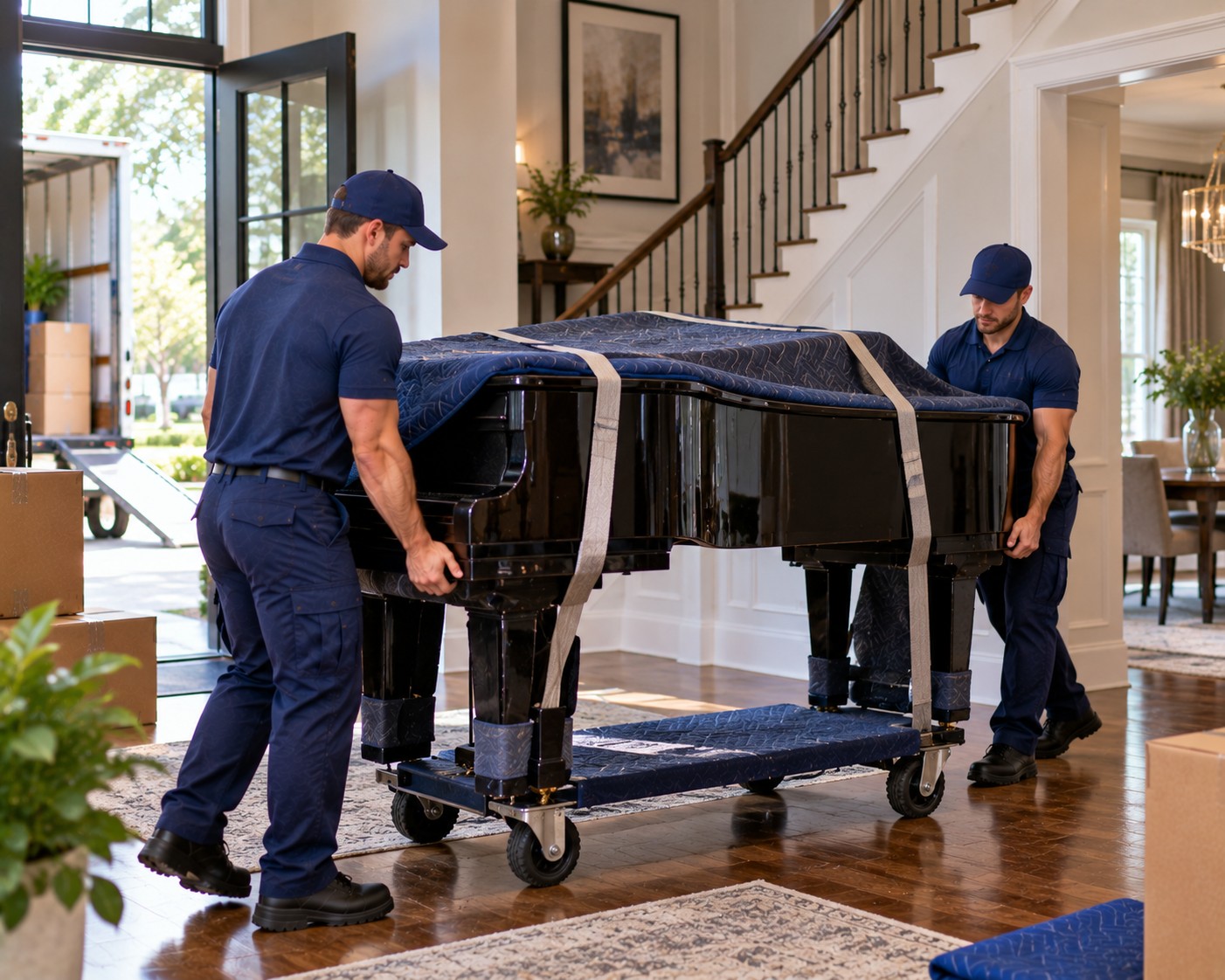
A grand piano can dominate a room with elegance, but that same size becomes a serious logistical challenge when the instrument has to pass through a narrow doorway. Its length, curved body, delicate finish, and considerable weight leave little room for improvisation. Even a doorway that looks only slightly too small can turn a routine relocation into a complex specialty move.
Professional piano movers approach these situations differently from ordinary furniture transportation. The objective is not simply to get the instrument through the entrance, but to determine the safest sequence of preparation, positioning, handling, and protection before any lifting begins.
Measure Everything Before the Piano Moves
The first step is understanding the dimensions of both the piano and its route. Movers examine the doorway, hallway, turns, staircases, and other access points that stand between the instrument and the vehicle.
Door height and width matter, but so do ceiling clearance and the amount of space available for turning the piano.
Look Beyond the Main Entrance
The front door may not be the only obstacle. A grand piano might need to pass through an interior doorway, around a corner, or along a narrow corridor before reaching the exit.
Experienced Heavy Specialty Item Piano Movers evaluate the entire route rather than focusing on one difficult opening. This allows them to identify potential problems before the piano is lifted.
Prepare the Instrument for Controlled Handling
A grand piano should not simply be wrapped and carried as one oversized object. Depending on its design and the route, professional movers may carefully prepare removable or vulnerable components to make handling more manageable.
The goal is to reduce unnecessary weight and create a configuration that can be controlled safely.
Protective padding is also important. The polished cabinet can be susceptible to scratches and impact marks, while exposed hardware and other delicate areas require careful attention.
Use the Right Position for the Doorway
Turning the Piano Requires Precision
When space is limited, the angle at which the piano approaches a doorway can make the difference between a smooth passage and a dangerous obstruction.
Movers may position the instrument strategically, controlling its movement in small increments. Instead of forcing the piano forward, they continuously check clearances around the cabinet and doorway.
This controlled approach is especially important with grand pianos because their shape is not symmetrical. The curved body and extended keyboard section create different clearance requirements depending on the angle.
Protect the Property as Well as the Piano
The walls, door frames, floors, and corners surrounding the route also need protection. Heavy padding, floor coverings, and other protective measures can help prevent accidental contact with finished surfaces.
For homeowners arranging a specialty relocation, https://promoversandstorage.com/ can provide information about moving services and professional assistance for demanding household items.
Plan for Stairs and Tight Turns
A narrow doorway is often only one part of the challenge. Once the piano passes through the entrance, stairs or sharp turns may follow.
Movers need to understand how the instrument will be positioned at each stage. The safest route may not be the shortest route, particularly when a wider alternative entrance or different access point is available.
Consider Alternative Access
In some properties, the best solution may involve a different doorway, a wider rear entrance, or another access route. Every property is different, so the decision depends on measurements and conditions at the location.
If conventional access is impossible, professional movers can determine whether specialized equipment or an alternative handling method is appropriate.
Avoid Last-Minute DIY Solutions
Trying to force a grand piano through a doorway with insufficient space can result in damage to the instrument or property. Improvised lifting methods can also make an already difficult maneuver unpredictable.
Heavy Specialty Item Piano Movers bring experience with oversized and delicate objects, allowing them to plan the movement rather than rely on strength alone.
That preparation becomes particularly valuable when the piano has sentimental, financial, or historical significance.
Coordinate the New Location Before Delivery
The destination should be measured just as carefully as the original property. Confirm that the new doorway, hallway, staircase, and final room can accommodate the piano.
Clear the route before the movers arrive. Remove unnecessary furniture, decorations, rugs, and other obstacles that could interfere with positioning.
Once the piano reaches its destination, it can be placed carefully in its intended location rather than being temporarily left somewhere convenient.
Give the Instrument Time to Settle
After transportation, a piano may benefit from time to adjust to its new environment before being played extensively. Temperature and humidity conditions can influence the instrument, so homeowners should follow appropriate care recommendations.
The relocation itself is only one part of protecting a valuable piano. Careful placement and post-move attention help preserve its condition.
Make a Difficult Doorway Part of the Plan
A narrow doorway does not automatically make a grand piano impossible to relocate. It simply means the move needs more preparation than an ordinary furniture delivery.
With accurate measurements, controlled positioning, protective materials, and experienced handling, specialty movers can navigate challenging entrances while reducing unnecessary risks. When every turn and clearance is considered beforehand, even an intimidating doorway becomes a manageable part of the relocation.
More information about specialty moving assistance is available at https://promoversandstorage.com/services/heavy-specialty-item-movers.