 By admin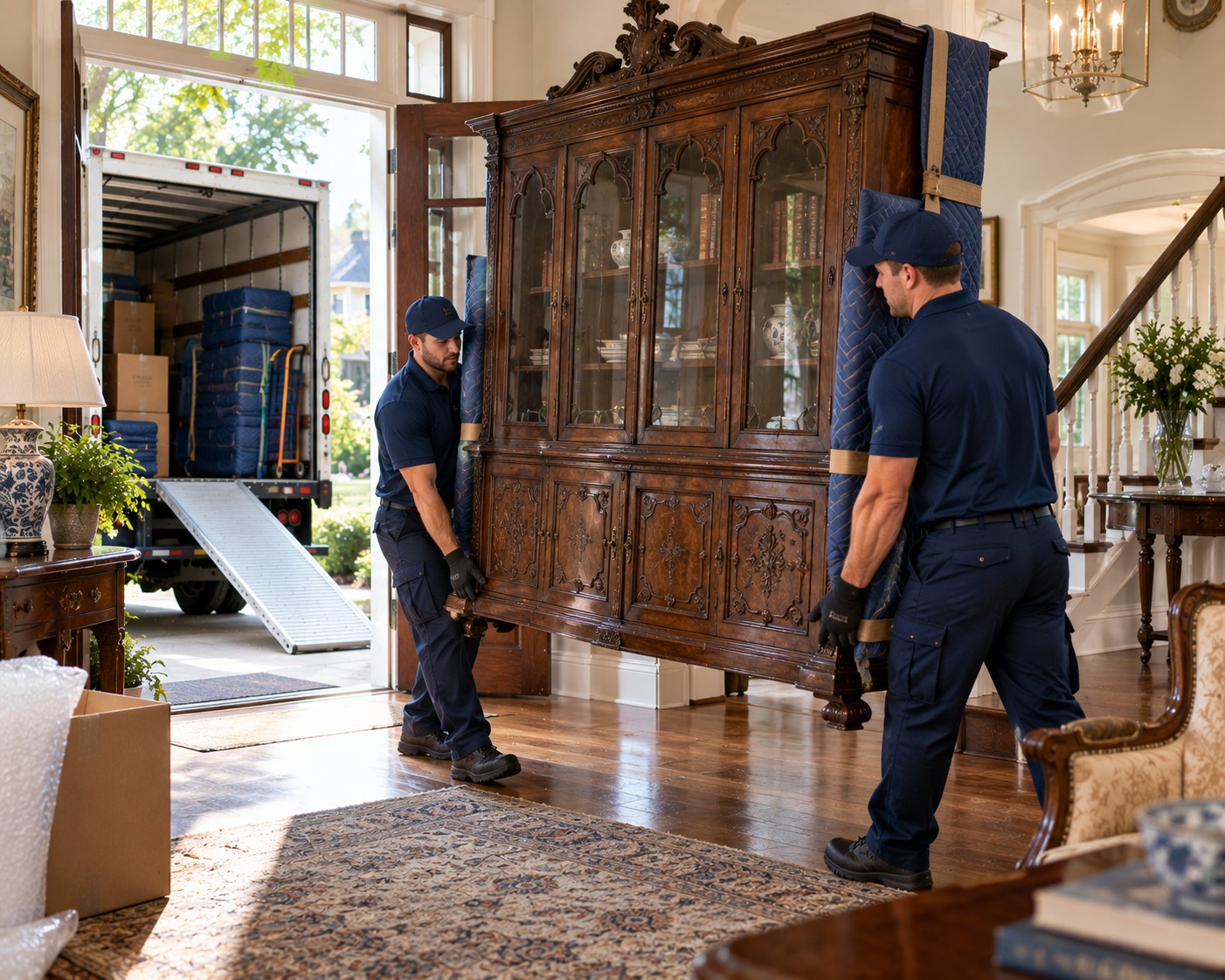
An antique cabinet rarely behaves like ordinary furniture. It may have a delicate veneer, hand-carved details, aged joints, ornate hardware, or a shape designed for rooms that no longer resemble modern interiors. Even when the cabinet looks solid, years of age can make certain components more vulnerable to vibration, pressure, and careless handling.
Moving one between Roswell properties therefore calls for a little more thought than simply finding enough people to lift it.
Examine the Cabinet Before Moving Day
Begin by inspecting the piece from top to bottom.
Check doors, drawers, handles, feet, decorative trim, hinges, and visible joints. Loose hardware should be secured or removed where appropriate. Drawers and shelves can often be taken out to reduce weight and make the cabinet easier to handle.
Photograph the cabinet beforehand as well. Detailed images provide a useful record of its condition and can help when remembering how removable components were originally positioned.
For homeowners arranging residential moving assistance, https://bigtmovers.com/roswell/ can be considered when planning the local logistics of an antique furniture relocation.
Measure the Route, Not Just the Furniture
A cabinet can fit comfortably inside a room yet become extremely difficult to move through the doorway.
Measure the cabinet’s height, width, and depth, then compare those dimensions with door openings and hallway clearance. Pay attention to corners, staircases, ceiling height, railings, and exterior steps.
The route from the cabinet’s current position to the vehicle should be considered as carefully as the route into the destination property.
Remove What Does Not Need to Travel Attached
Reducing the cabinet’s weight can make handling safer.
Remove loose shelves and empty drawers when the construction allows it. Decorative elements should not be detached simply for convenience if doing so could damage an original feature, but genuinely removable parts can be protected independently.
Keep screws, hinges, and small fittings together in a labeled container. Antique hardware can be difficult to replace, so treating small components as carefully as the cabinet itself is worthwhile.
Protect the Finish From Contact

The exterior surface deserves particular attention.
Avoid allowing the cabinet to rub directly against walls, door frames, flooring, or other furniture. Protective blankets or suitable padding can help reduce the chance of scratches and impacts during transportation.
Corners and carved projections may require additional protection because they can catch on doorways or other surfaces.
Moisture should also be avoided. Antique wood can react poorly to excessive humidity, sudden environmental changes, or prolonged exposure to damp conditions.
Keep Drawers and Doors Secure
A moving cabinet can become unstable when doors or drawers swing open unexpectedly.
Secure them carefully using methods that do not damage the finish. Avoid applying aggressive adhesive directly to an antique surface. If doors are particularly fragile, removing them may be preferable to attempting to keep them closed during handling.
Glass panels require separate consideration and should never be assumed to be as robust as the surrounding frame.
Think About Weight Distribution
Large antique cabinets can be deceptively heavy because of dense wood construction.
Do not underestimate the weight simply because the piece is narrower than a modern wardrobe. The center of gravity may also change when shelves and drawers are removed.
Homeowners researching movers in Warner Robins GA may encounter moving companies serving multiple Georgia communities, but the same practical question applies everywhere: does the planned handling approach account for the furniture’s dimensions, weight, construction, and access conditions?
Prepare the New Room Before Delivery
The destination should be ready before the cabinet arrives.
Clear furniture, rugs, boxes, and decorative objects from the intended path. Decide where the cabinet will stand and make sure the surrounding space allows its doors and drawers to open comfortably.
This is especially useful with antique pieces because repeatedly shifting them after placement creates unnecessary handling.
Let the Cabinet Settle Into Its New Space
Once positioned, avoid immediately filling every drawer and shelf.
Give the piece time to settle in its new environment before loading it with heavy objects. Check that it stands securely and that doors and drawers operate correctly.
For homeowners comparing Movers in Roswell GA, communicating the cabinet’s characteristics ahead of time can help ensure that the move is approached as a specialized furniture task rather than routine box transportation.
An antique cabinet carries both physical and historical value. Its successful relocation depends on details that might seem minor: measuring the route, securing removable components, protecting the finish, controlling weight, and preparing the destination room. With those considerations addressed in advance, a treasured piece can move between Roswell homes without sacrificing the character that made it worth keeping.