 By admin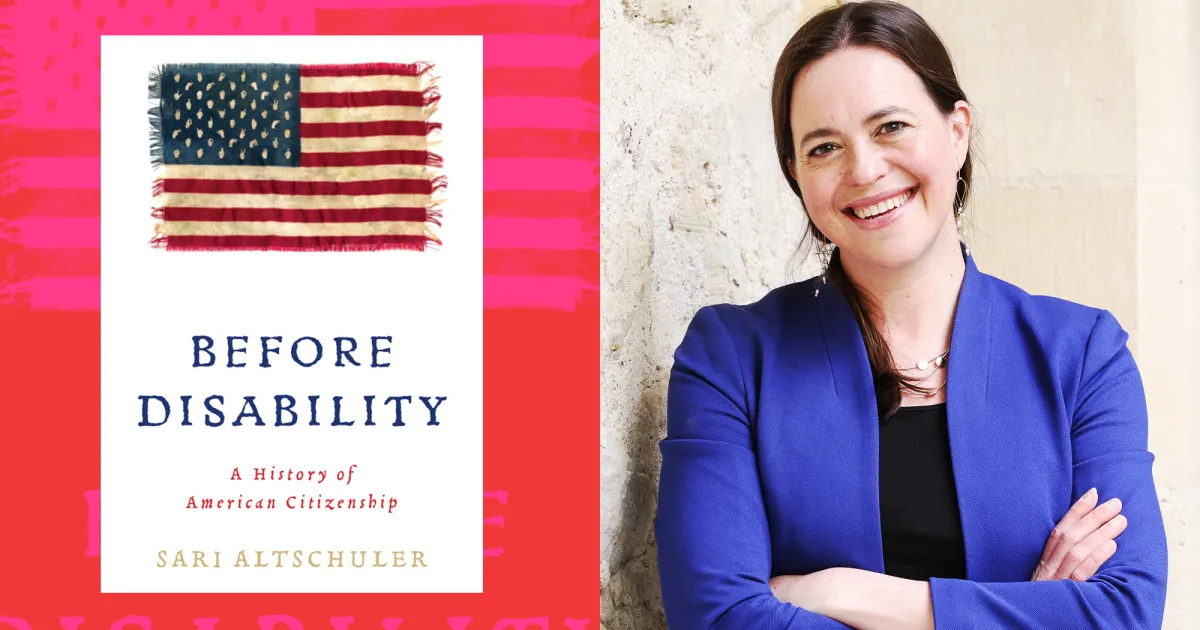
We tend to treat disability politics as a modern phenomenon, the product of disability civil rights movements in the latter part of the 20th century. It’s not: the long arc of that history, in fact, goes back to the American Revolution, whose new ideas promised some disabled white Americans an unprecedented level of inclusion—and to the decades after, when the idea that some groups of people had inherent deficits became profoundly racially coded, setting up struggles around eugenics and full American citizenship that continue to this day.
Read more The White House Cage Fight Was Spectacular—And Spectacularly Corrupt
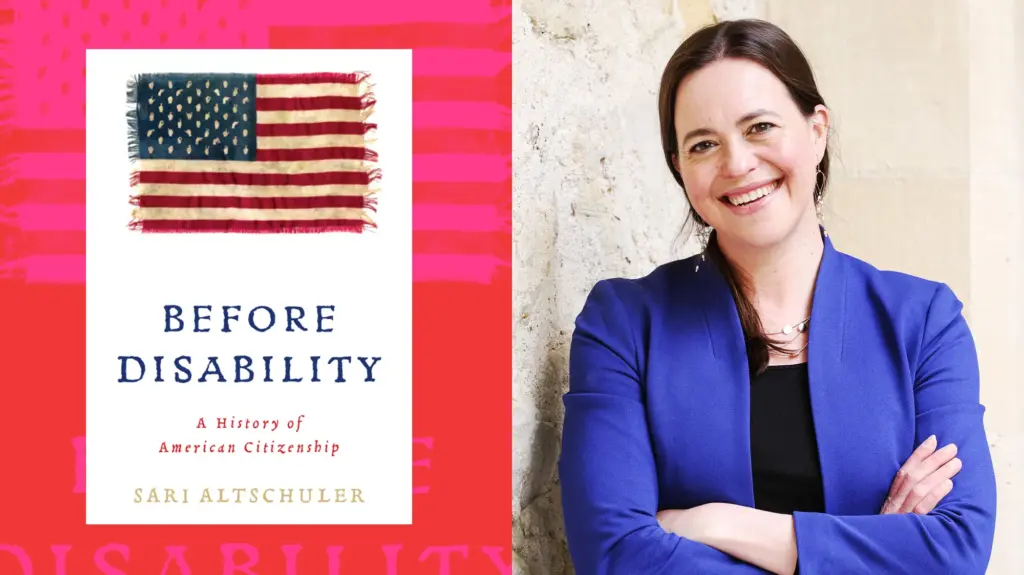
In her new book Before Disability, Northeastern University professor Sari Altschuler, who studies American literature and culture, explores “how disability helped to shape US citizenship and, in turn, how the formation of US citizenship shaped disability,” especially in the lead-up to the Civil War, after which formerly enslaved Black people were recognized as citizens under the 14th Amendment.
It’s a complicated history, one that includes characters like John Jacob Flournoy, who pushed for a separatist Deaf state in the American West that would be exclusively white, and other advocates for an early disability politics that to rejected Indigenous and Black disabled people.
I spoke to Altschuler about legal efforts to classify Black and Indigenous people as disabled, the history—and limitations—of white disabled Americans’ activism in the 18th and 19th centuries, and what lessons it offers us today.
This interview has been edited for length and clarity.
Could you speak to white Americans’ efforts to portray Black and Indigenous people as disabled in early US history, to deprive them of their rights whether or not they had a disability?
Probably the most infamous case occurred in the federal census of 1840, which appeared to show that freedom disabled Black Americans. While some disability-related categories had first appeared on the US Census in 1830—to fund, for example, schools for Deaf students—suddenly, in 1840, the results of the census appeared to show that Black Americans were more deaf, insane, and cognitively impaired by orders of magnitudein the North than in the South.
This was exactly the proof slavery’s advocates wanted to prove [that] Black Americans were unprepared for the rights and responsibilities of freedom and citizenship, and they recited the statistics triumphantly. What’s interesting is that even at the time, people knew the numbers were bunk. For example, the Census identified pockets of Deaf Black people in towns that had no Black people at all. Politicians, physicians, and abolitionists cried foul, noting numerous irregularities and falsehoods, but efforts to correct the official record ultimately failed.
Today, Indigenous and Black people have the highest rates of disability due to systemic racism in health care, intergenerational trauma, and environmental inequality. Do you think this speaks to the importance of tracing the links of dehumanization—which I’d argue can be seen in depriving people of citizenship, slavery, and forced displacement?
Yes—absolutely. Depriving people of citizenship and subjecting them to slavery and forced migration have had devastating, long-term consequences, and one of them has been the mass disabling of Indigenous and Black people in the United States. Even in the nineteenth century, abolitionists countered the racist idea that freedom was disabling by showing that, in fact, the reverse was true: slavery was disabling, not freedom, and of course they were right.
What really interested me, though, was to learn that a few decades before the 1840 Census, the relationship between race and mental and physical differences had been understood quite differently. Roughly speaking, before 1840, body and mind differences were understood to be largely situational rather than somatic, even for enslaved people by their enslavers. For white Americans especially, mental and physical difference could be accommodated into citizenship, however imperfect and lacking that integration often was in practice. After 1840, body and mind differences were increasingly understood as fixed, biological, and difficult to integrate.
One key driver of these shifts was the collaboration between Southern medicine and slave law. The new role of doctors in courts as objective observers helped make those differences more biologically fixed, rather than the result of environment, religious belief, divine visitation, or other more fluid and flexible characteristics, as they had been previously understood. This new, more biological framing of Black mental and physical differences primed disability for its increasingly central role—for both sides—as evidence in the national debates about race, slavery, and citizenship.
Another key driver was this: as white Americans with body and mind differences moved through institutions and practices created to bring distinct groups into citizenship, they found community there, and, rather than assimilating seamlessly into white America, they began to identify and advocate for themselves in ways that increasingly separated them from the broader nation.
Read more RFK Jr. Will Oversee Disability Education Policy
For example, Deaf education was so successful in creating Deaf culture and community that it threatened those interested in a more homogenous national community. Alexander Graham Bell would eventually warn against sign language as a “foreign language” which contributed to “the formation of a deaf variety of the human race in America.”
What I want to underscore is that the increasingly biologized linking of race and disability was not even or inevitable. Even structural causes of oppression like the ones you list above are the product of specific historical developments. Things could have happened differently in the past and can be different, again, in the future.
In what ways did white disabled Americans’ fight for legal rights exclude Black and Indigenous disabled people? What does that teach us about the limitations of some activism?
There certainly were many examples. An eccentric Deaf graduate of the first school for Deaf Americans, John Jacobus Flournoy, declared in 1855 that Deaf Americans could never be full citizens in any existing state; he pressed for a new state in the West called Gallaudet that was “the manifest destiny of our people”—by which he meant white, Deaf Americans. Only in a state of their own could they be full citizens—but no Black residents, enslaved or free, would be allowed. Interestingly, the school he graduated from felt differently. His alma mater educated both white and Black students every year between 1825 to 1870, except the seven years when Connecticut banned Black students from out of state.
Flournoy’s example shows us that for some advocates, fighting for your own inclusion doesn’t mean fighting for everyone. Certainly many people today know this problem intimately, and have seen examples that are less obviously racist than Flournoy’s. The disconnect between his advocacy and that of his alma mater reminds us, however, how many different viewpoints are often present in the same group, and to remember that advocacy in the past was as rich and varied as advocacy in the present.
What types of support were veterans given in US history that other disabled people were not afforded?
Disabled veterans are a really different group from the rest. They were, in many ways, a category imagined before they existed. Just one month after the Declaration of Independence, the Continental Congress passed a law providing pensions for disabled veterans. The creation of this category was essential. If you expect people to enlist, you have to tell them you’ll take care of them afterward. Furthermore, veteran disability is symbolically central to citizenship: it represents the patriotic sacrifice for the country.
Still, the category is fraught. There’s often a disconnect between the public praise of those citizens and their actual treatment. You can see some of this in the 1818 Veteran Pension Act, which was imagined as a way to celebrate and support citizens who had risked body and mind for nation—especially the aging, disabled, and poor veterans of the Revolutionary War. But as costs ballooned to more than ten times the estimated expense, there was broad speculation of pensioner swindling. When veterans receiving a pension first appeared on the federal Census in 1840, two decades later, it was not to celebrate them or to fund more services but to root out fraud.
Finally, it’s worth mentioning that the disabled veterans who received pensions were largely white men. They were symbolically, demographically, and situationally different than other groups in the book—blind, Deaf, mad, and cognitively impaired Americans, and they received benefits other disabled Americans did not.
What lessons do you think we can learn from today about how disability was viewed in the 18th and 19th centuries in the United States?
A key argument of the book is that in the first decades of nationhood, mental and physical differences were imagined as accommodable into US citizenship, if not exemplary of the promises of the republic. Even as that rosy vision faded, it did not do so evenly. The year 1840 is very revealing in this way. On one hand, a number of fields including medicine and law were creating disability as a racialized, biological category. That year’s census offers a very clear example of that destructive shift at work. On the other hand, the civic capacities of disabled Americans had never been so central to public culture, so financially supported, and so broadly known. In 1840, for example, more blind Americans could read and write than ever before.
Centering the long, complicated, and uneven history of disability and citizenship and its variety of historical forms helps us place our pursuit of disability rights and justice on firmer ground. Mental and physical differences played a key role in shaping citizenship from the beginning; the fight for disability rights and justice was meaningfully waged and victories won even when things seemed most dire. As we seek to imagine the relationship between disability and citizenship more equitably and expansively today, we should begin by remembering that many disabled and non-disabled Americans before us did too.
Read more Here’s What Americans Really Blame for Causing Energy Price Hikes